Guides · October 27, 2026 · 1 min read
Heavyweight vs midweight tees: what GSM actually means
GSM is the number on the fabric that tells you how a tee will hang, wash and last. A short, plain guide to reading it.
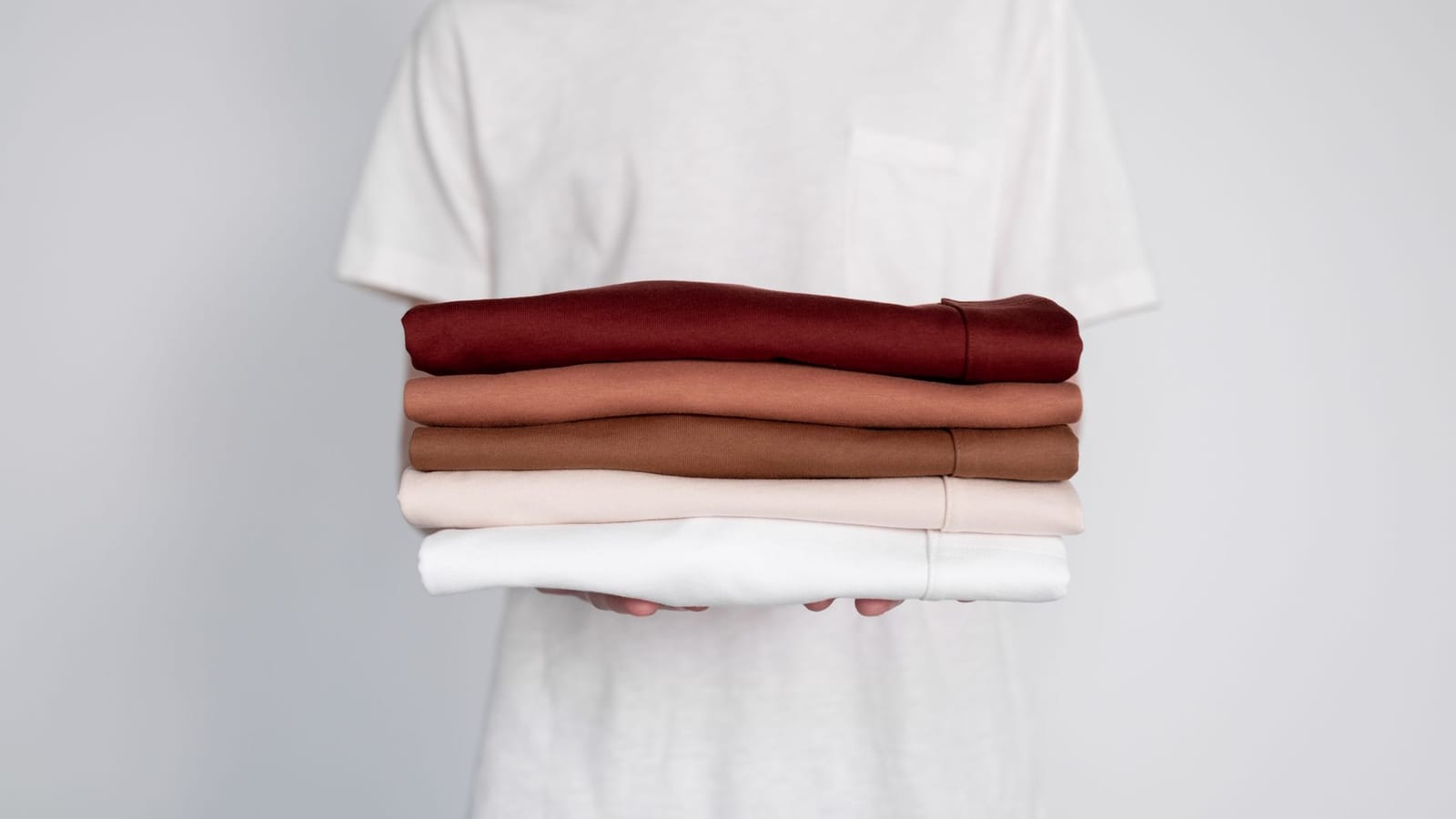
GSM means grams per square meter. It is the weight of the fabric, and it tells you more about a tee than the brand does.
The ranges
Under 160 gsm is lightweight: thin, cool and often see-through in pale colors. Between 160 and 220 gsm is midweight, the usual fast-fashion tee. Above 240 gsm is heavyweight: dense, opaque, and slow to wear out.
What changes with weight
A heavyweight tee drapes away from the body instead of clinging to it. It keeps its collar shape, it hides what is under it, and it holds a boxy cut without sagging. It also feels warmer, so in a Lebanese August a 240 gsm tee is a better choice than a 300.
Weight is not everything
A heavy tee made from short, cheap fibers still pills. Look for combed cotton, which removes the short fibers and gives a smoother surface, and for a ribbed collar with a little elastane so the neck does not stretch.
How to check in a shop (or online)
Ask for the gsm. Hold the tee up to the light: if you can see your hand through it, it is a lightweight. Pull the collar: it should snap back. Online, look for a stated gsm, a stated fiber content and clear photos of the neckline.
Which one should you buy?
For daily wear and layering, a 240 to 280 gsm tee. For the hottest weeks, a 180 to 200 gsm. For a tee that will be washed every week for years, go heavy.